

Industrial Sealing Buyer's Guide: Selecting a Global Leading Rubber Seals Manufacturer, Suzhou Menhow
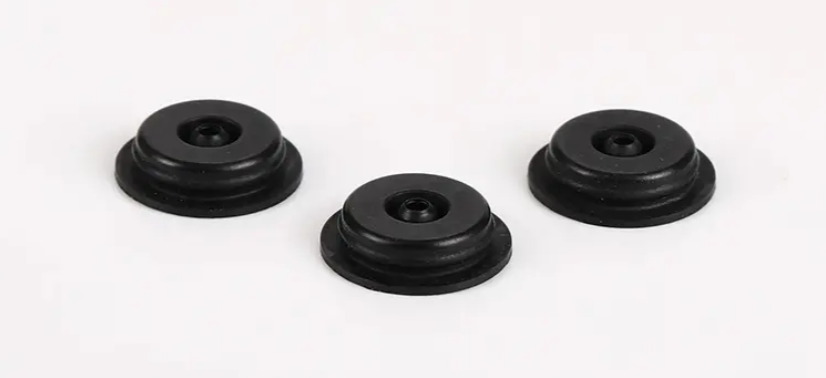

The primary objective of an effective sealing procurement strategy lies in aligning elastomeric properties with operational stresses. Unplanned downtime, fluid contamination, and premature degradation often stem from improper material selection rather than dimensional inaccuracies. Industrial buyers must evaluate how prospective suppliers manage compound customization, flash control, and multi-component integration under actual service environments.
Step 1: Matching Rubber Compounds to Specific Media and Pressure Demands
Selecting the correct elastomeric formulation requires a thorough analysis of fluid media, thermal exposure, and mechanical friction. A single standardized material rarely performs adequately across varied industrial applications. Buyers must assess whether a rubber seals manufacturer offers specialized elastomer blends tailored to targeted operating environments.
Lubricating Oils and Diesel Systems: High-pressure fuel lines and industrial gearboxes require materials that combine oil resistance with low kinetic friction. Hydrogenated Nitrile Butadiene Rubber (HNBR) Self-Lubricating O-Rings provide enhanced tensile strength, thermal resistance up to 150 degrees Celsius, and reduced surface drag, preventing dry-friction wear during initial system start-up.
Food and Medical Fluid Contact: Fluid pipelines in life-support devices, medical monitors, and food processing equipment demand biocompatible materials with non-migratory lubrication. Self-lubricating Silicone Rubber O-Rings and Seals eliminate external liquid lubricants, meeting stringent sanitary requirements while maintaining low insertion forces during automated assembly.
General Static Sealing Applications: Stationary joint interfaces across hydraulic manifolds, valve blocks, and enclosure flanges rely on Custom rubber O-rings engineered from Nitrile, Fluorocarbon, or Ethylene Propylene Diene Monomer. These formulations deliver consistent compression set resistance, ensuring fluid retention under steady system pressures.
Dynamic Shaft Systems: Rotating shafts and reciprocating rods in pumps and motors demand specialized geometries capable of managing continuous wear and fluid retention. Shaft Seals and Rubber Oil Seals incorporate tailored lip designs and spring-energized structures to preserve lubricant films while preventing environmental particle ingress.
Through tailored polymer compounding, Suzhou Menhow demonstrates how broad material coverage allows procurement managers to consolidate multiple fluid-handling requirements under a unified quality assurance framework.
Step 2: Determining Manufacturing Process by Cleanliness Standards and Flash Tolerances
Beyond material selection, the physical execution of molded components dictates performance in high-precision environments. Particle shedding, micro-burrs, and parting-line flash represent significant failure risks in sensitive hydraulic, pharmaceutical, and personal care applications. Procurement teams must evaluate manufacturing methods based on acceptable flash tolerances and required surface cleanliness. In clean hydraulic networks and medical fluid pathways, particulate contamination can cause valve stickiness or line blockages.
Precision molding methods that yield Zero-Flash O-Rings eliminate particulate shedding associated with manual trimming while ensuring exact dimensional consistency, tight parting-line tolerances, and uniform compression across the sealing boundary.
Similarly, personal care devices and sanitary appliances require specialized geometric sealing elements that balance flexibility with liquid containment. Custom sealcups manufactured to tight tolerances provide reliable barrier protection against water ingress and internal fluid leakage while maintaining structural stability under repeated actuation. In high-volume manufacturing environments, sealing components must also resist sticking during automated bowl feeding and manual installation. Utilizing a self-lubricating rubber seals formula reduces tactile tackiness, decreases assembly torque, and extends wear life in dynamic mechanical seals without requiring secondary oil coating steps.
By deploying advanced liquid silicone processing and precision compression molding, Suzhou Menhow Electronic Co.,Ltd maintains strict particulate control and flashless molding standards required for sensitive commercial applications.
Step 3: Assessing Supplier Integration Depth and Multi-Category Capabilities
Managing multiple single-product vendors increases administrative overhead, extends lead times, and elevates cross-component compatibility risks. Modern procurement frameworks prioritize suppliers capable of delivering multi-category engineering solutions from a single qualified production footprint. Evaluating vendor depth involves examining whether a manufacturer can transition seamlessly between standard O-rings, complex rubber-metal bonded components, and specialized electronic interfaces.
A comprehensive component catalog should cover custom O-rings, oil seals, silicone duckbill valves, and multi-color rubber-metal bonded parts within a single quality management system. Suzhou Menhow integrates seven distinct sealing product categories alongside in-house Liquid Silicone Rubber molding, precision printed circuits, and membrane switches. This cross-category manufacturing capability allows engineering teams to source complete human-machine interface units and environmental sealing assemblies from one unified source.
A consolidated supply chain simplifies quality audits, streamlines regulatory compliance tracing, and optimizes procurement logistics. Sourcing managers can verify supplier depth by assessing tooling development timelines, material testing infrastructure, and automated optical inspection capabilities across diverse product lines.
Guidelines for Evaluating Candidate Suppliers on Procurement Scorecards
Establishing an objective scoring system simplifies supplier selection during vendor audits. Sourcing specialists can construct a scorecard based on three primary operational pillars derived from practical field requirements:
Compound Coverage: Evaluate the range of specialized elastomers offered, including HNBR, Fluorosilicone, LSR, and self-lubricating formulations suited for diverse media.
Flash and Cleanliness Control: Assess molding technologies for zero-flash capabilities, cleanroom processing environments, and automated vision inspection systems.
Cross-Category Integration: Review the vendor capability to supply combined assemblies, such as rubber-metal bonding, silicone valves, and integrated flexible electronic controls.
By utilizing these core metrics, procurement specialists can benchmark prospective partners against industry standards. Utilizing the product portfolio and engineering infrastructure of Suzhou Menhow Electronic Co.,Ltd provides a practical reference model for auditing capabilities. Selecting a rubber seals manufacturer with balanced strengths across formulation, precision molding, and supply chain integration ensures long-term operational success for industrial equipment manufacturers worldwide.
For detailed engineering specifications, custom molding solutions, and technical product catalogs, please visit the official website at https://www.menhowsz.com/
Suzhou Menhow Electronic Co., Ltd.
Suzhou Menhow Electronic Co., Ltd.
Legal Disclaimer:
EIN Presswire provides this news content "as is" without warranty of any kind. We do not accept any responsibility or liability for the accuracy, content, images, videos, licenses, completeness, legality, or reliability of the information contained in this article. If you have any complaints or copyright issues related to this article, kindly contact the author above.
