

Housing Crisis: 52 Years After Building His First Home, Wayne Sedawie Says Australia's Approval System Is Broken
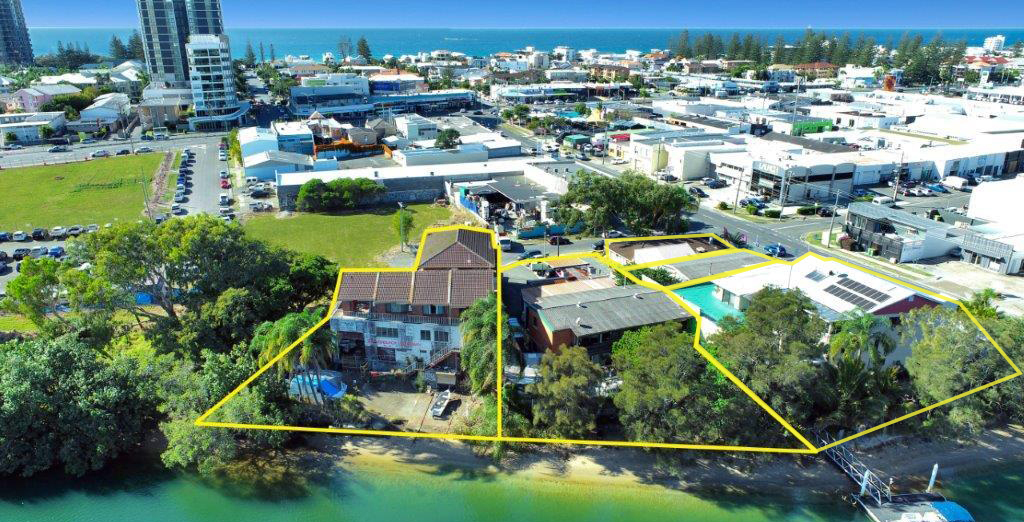
delevopment site amalgamation

Bubble Genius: Business Secrets from a Self-Made Millionaire for Success Beyond Money

Stevie award
"Why does it take two or three times longer today to build the same house I built in 1975 in 5.5 months?" Sedawie demands. "This isn't progress
GOLD COAST, AUSTRALIA, August 31, 2026 /EINPresswire.com/ -- Australian entrepreneur and long-term property investor Wayne Sedawie is issuing a blunt challenge to policymakers: Australia's housing approval system is failing, and no amount of political spin will change the arithmetic. With more than five decades of business and property experience, Sedawie says the country's housing affordability crisis is not primarily a land, labour or materials problem — it is a time problem, and time is money.Sedawie built his first three-bedroom home in 1975, completing construction start to finish in approximately 5.5 months. He remembers the milestone precisely — he celebrated his 21st birthday in the finished house. Today, he says, a comparable three-bedroom build takes 18 to 24 months from planning and approval through to completion — two to three times longer than half a century ago.
. This is a system that has lost sight of what it's supposed to protect."
Regulation Has Multiplied — Safety Hasn't
Sedawie is not arguing against safety standards. He is arguing against the unchecked accumulation of them. Modern residential builds now require extensive engineering documentation, energy-efficiency assessments, bushfire and flood reports, detailed planning schemes, private certification, National Construction Code compliance, environmental and stormwater approvals, accessibility requirements, and a growing stack of specialist reports.
"Each requirement might sound reasonable in isolation," Sedawie says. "Stack them all together and the total cost becomes enormous — and nobody in government is asking whether any single one of them actually makes a house safer."
He points to his own experience replacing a 26-year-old hot-water system — a unit that had performed reliably for over two and a half decades — only to be hit with roughly $1,000 in additional compliance costs for meter-box and plumbing work unrelated to the appliance itself. "The old system worked for 26 years. That should tell you something," he says.
Sedawie also challenges the assumption that newer automatically means better. "My first home was built with heavy hardwood timber. Some of the softer materials used in construction today are simply not as strong," he says. "We've regulated the process into the ground while quietly downgrading the materials. That's not a safety improvement — that's a trade-off nobody voted for."
A Warning From Inside Business
Sedawie says the same regulatory paralysis is strangling Australian industry more broadly. One of his companies, which imports electrical leads, was unable to find a single Australian certification body capable of completing new mandatory testing. The business was forced to obtain certification through providers in Germany and China instead.
"If legitimate Australian businesses can't get compliance work done in Australia, something is fundamentally broken," Sedawie says. "Safety matters. But a system that can't service its own compliance requirements isn't protecting anyone — it's just adding cost and delay while achieving nothing."
The Fix: Treat Housing Like Manufacturing
Sedawie is calling for a wholesale shift in how Australia approaches home construction — away from case-by-case, fully bespoke approvals and toward standardised, factory-driven production
"Once a design is properly approved, why are we reinventing the wheel every single time we build the same house?" Sedawie asks. "This is a solved problem in manufacturing. It should be a solved problem in housing."
Time Is the Cost Nobody's Counting
Sedawie argues the national housing debate has fixated on land, labour and material costs while ignoring the compounding cost of delay itself. "Every month a project is stalled, someone pays for it — land interest, construction finance, insurance, council rates, temporary accommodation, rising material and labour costs. Time is money. Cut the time between approval and completion, and you cut the total cost of the house," he says.
"Government Thinks Academically. Business Doesn't Have That Luxury."
Sedawie's sharpest warning is reserved for what comes next. "Every year this problem gets worse, because the people writing housing policy have never run a business, never met a payroll, and never had to deliver a project on time and on budget," he says. "Their approach is academic — theoretical models, committee reviews, endless consultation. Business doesn't work that way, and neither should housing."
He argues this mismatch is exactly why costs will keep climbing after 2027. "Every new policy adds another layer of process, because that's what bureaucracies do — they add, they never subtract. Nobody in government asks whether something actually works commercially. In business, if a process doesn't add value, you cut it or you go broke. Government has no such discipline, so the compliance pile keeps growing — and buyers keep paying for it. That's not a prediction. That's common business sense applied to a system that has none."
A Direct Warning to Buyers
Sedawie is not mincing words about the road ahead. "In 1975 it took me 5.5 months to build a house. Today it takes 18 to 24 months, compliance costs are astronomical, and the result isn't safer — it's slower and more expensive. Government policy will make housing more expensive again from 2027. Buy now, or miss the opportunity," he warns.
Sedawie is emphatic his proposal is not about cutting corners. "The answer isn't cheaper houses built worse. The answer is good houses built faster," he says. "We need better houses, faster approvals, standardised components and factory manufacturing — not lower standards. Australia has a housing affordability crisis, and it's about to get worse under its own weight. If we want younger Australians to own homes, every part of the cost — planning, compliance, construction, finance — needs to be put on the table, now."
About Wayne Sedawie
Wayne Sedawie is an Australian entrepreneur, long-term investor and businessman with more than five decades of business experience, having generated over $200 million in online auction sales across coins, gemstones and opals. His perspective on housing affordability is shaped by decades of hands-on experience in business, property and investment, including the amalgamation of five properties for a 444-unit developme
wayne j sedawie
Treasureauctions
+61 418 151 227
email us here
Visit us on social media:
LinkedIn
Instagram
Facebook
YouTube
TikTok
Australias Housing Crises will get worse due Goverment acedemic regulations n policys
Legal Disclaimer:
EIN Presswire provides this news content "as is" without warranty of any kind. We do not accept any responsibility or liability for the accuracy, content, images, videos, licenses, completeness, legality, or reliability of the information contained in this article. If you have any complaints or copyright issues related to this article, kindly contact the author above.
